In Short
- Power BI and Tableau cover most dashboard needs, while Health Catalyst and Innovaccer add healthcare-specific content.
- Interoperability platforms such as InterSystems IRIS for Health solve data access, not reporting.
- Most healthcare platforms do not publish prices, so ask for a quote and a pilot on your own data.
- Pick by decision and data readiness first, then compare vendors.
The Best Healthcare Analytics Software at a Glance
| Tool | Type | Best for |
|---|---|---|
| 1. Microsoft Power BI | General BI platform | Microsoft-based teams and finance dashboards |
| 2. Tableau | Visual analytics | Analysts who explore across service lines |
| 3. Health Catalyst | Healthcare data platform | Health systems wanting built-in clinical content |
| 4. Innovaccer | Population health platform | Networks managing populations and outreach |
| 5. Qlik Sense | Associative analytics | Large teams with data engineers |
| 6. InterSystems IRIS for Health | Interoperability platform | Standards-based data exchange |
| 7. Oracle Enterprise Healthcare Analytics | Enterprise healthcare analytics | Oracle-centered organizations |
| 8. Arcadia | Value-based care analytics | Risk contracts and value-based care |
| 9. Definitive Healthcare | Market intelligence | Strategy and market sizing |
The 9 Best Healthcare Analytics Software Options, Ranked
I start with the tools that suit the widest range of organizations and move toward specialist platforms, so you can stop reading once you find your fit. The software is only part of the result: in the healthcare analytics consulting projects I review, agreeing on definitions and fixing data quality matters more than the choice of dashboard tool. Ratings and prices below were read from the vendors, G2 and Capterra when I wrote this, and I left a figure out where I could not read it.
Microsoft Power BI
The Default Choice When Your Hospital or Practice Already Runs on Microsoft
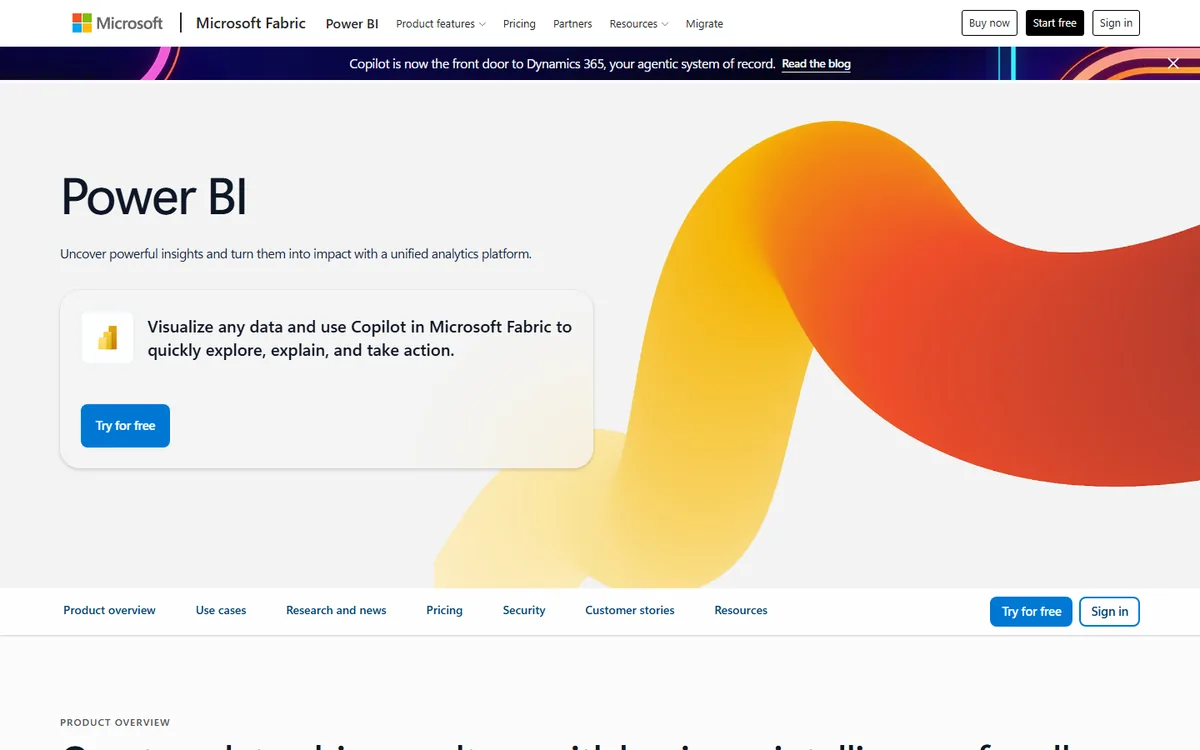
Power BI turns data from spreadsheets, databases and cloud services into interactive dashboards, with a free desktop tool and per-user plans for sharing.
Power BI is where most healthcare finance and operations teams I work with start, because it is already licensed or cheap to add and analysts know Excel-style logic. You can pull in an EHR extract, a billing file and a staffing sheet, model them together and publish a dashboard to department heads in a week.
The catch is governance. Power BI makes it easy for every team to build its own reports, and in healthcare that leads to three versions of readmission rate. I advise clients to build certified datasets first and let departments build on top. It is also a general BI tool, so clinical content such as risk adjustment or quality measures is yours to build or buy separately. For context on where tools fit in a wider program, see my healthcare analytics use cases guide.
Where Microsoft Power BI Shines
- Low entry cost and a large pool of skilled analysts
- Strong Excel, Azure and Microsoft 365 integration
- Fast to build operational and finance dashboards
Where Microsoft Power BI Falls Short
- No built-in clinical content, so measures are yours to define
- Report sprawl without a governed dataset layer
Microsoft Power BI Pricing
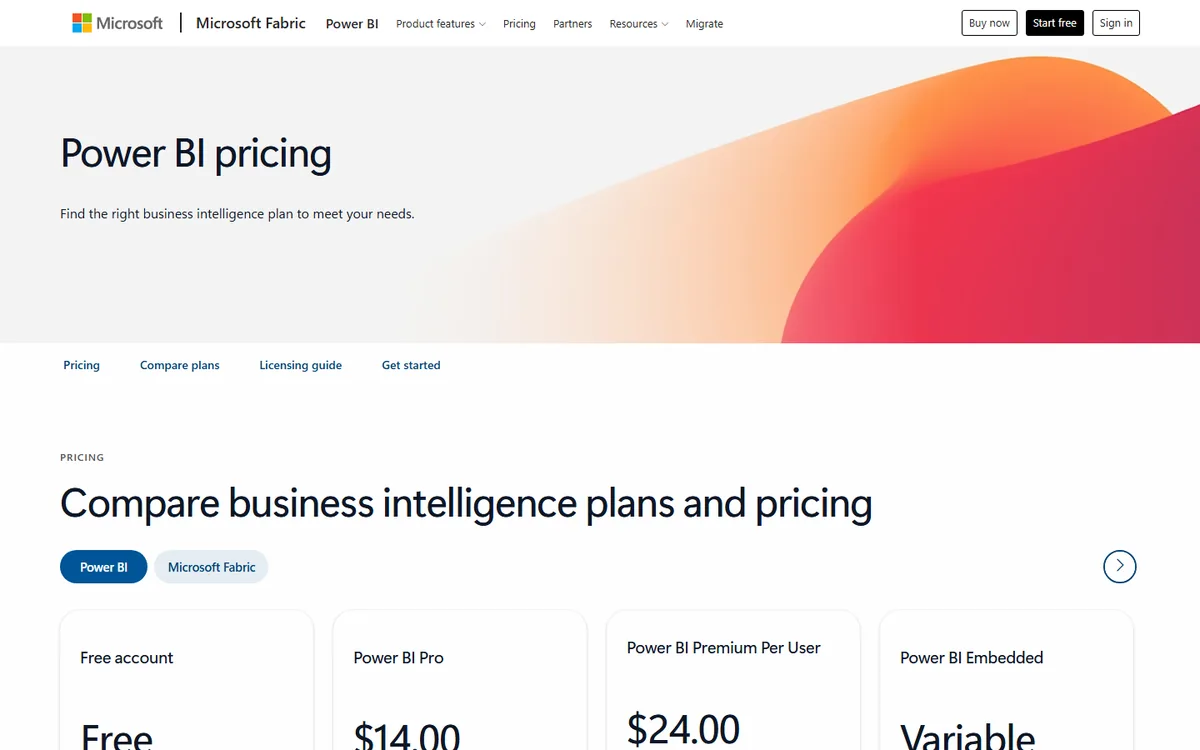
Microsoft lists Power BI Pro at $14.00 per user per month billed yearly and Premium Per User at $24.00 per user per month. Larger deployments use Fabric or Premium capacity, which is priced separately.
Microsoft Power BI Reviews
- Capterra: rated 4.6/5 (across 1,894 ratings)
Tableau
The Strongest Option for Exploratory Analysis and Polished Visuals Across Clinical and Financial Data
Tableau is a visual analytics platform known for drag-and-drop exploration, and it connects to most warehouses and files.
Tableau suits analysts who need to explore. When a quality director asks why length of stay rose on one unit, a good Tableau analyst can slice by diagnosis group, payer and day of week in minutes and find the pattern during the meeting.
In my experience, Tableau pays off in organizations with a few strong analysts and a clean warehouse behind them. It costs more per seat than Power BI, and performance depends on how you model extracts. If your data is still scattered across systems, fix that layer first, otherwise you pay for beautiful charts on shaky numbers. For context on where tools fit in a wider program, see my healthcare analytics examples guide.
Where Tableau Shines
- Excellent for ad hoc exploration and visual storytelling
- Connects to most databases and cloud warehouses
- Active community and many templates
Where Tableau Falls Short
- Higher per-user cost than Power BI
- Performance needs careful extract and model design
Tableau Pricing
G2 lists Standard at $75 per user per month and Enterprise at $115 per user per month, with Tableau+ by quote. Confirm current plans with Tableau before you buy.
Tableau Reviews
- G2: rated 4.4/5 (across 4,237 ratings)
Health Catalyst
A Healthcare-Specific Data Platform With Clinical and Financial Content Built In
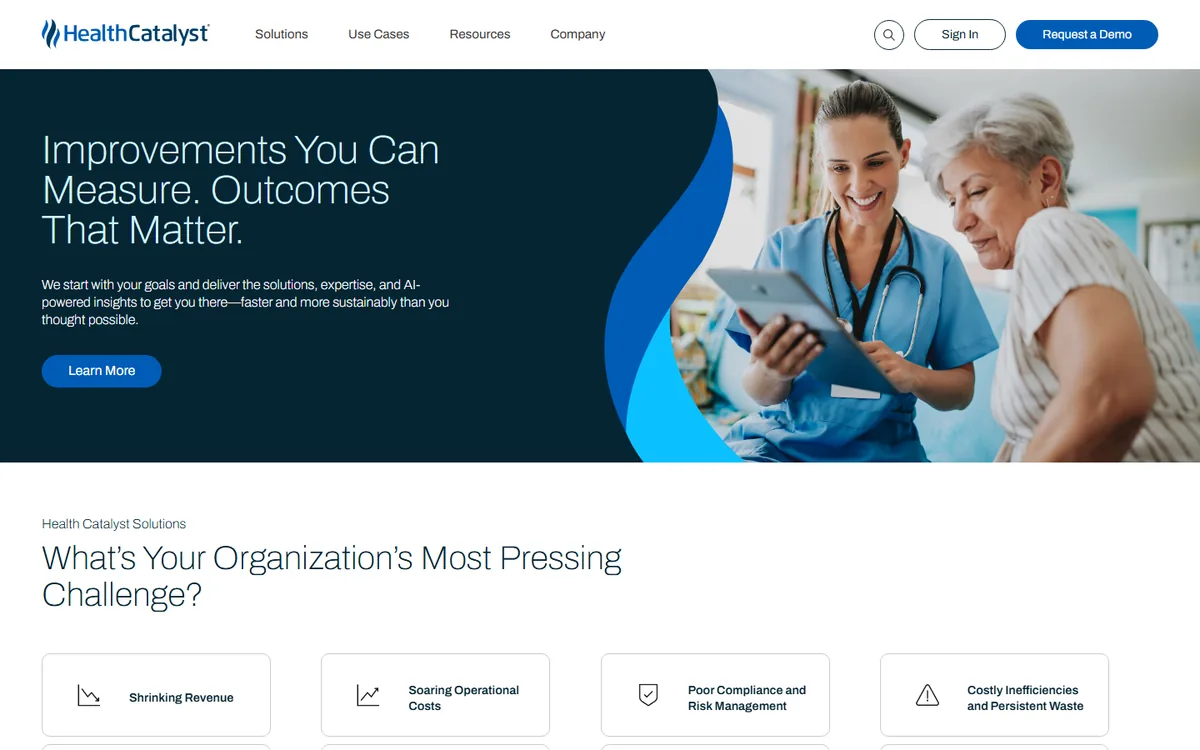
Health Catalyst offers a data platform and analytics applications built for provider organizations, with healthcare data models and improvement content.
Health Catalyst targets health systems that want more than a general BI tool. Its platform brings EHR, financial and other sources into a healthcare data model, and its applications add measures for areas such as quality, cost and operations.
The trade-off is commitment. You adopt a vendor's data model and way of working, and projects tend to be larger than a Power BI rollout. It fits organizations that want a healthcare-specific foundation and have the budget and sponsorship to see it through. Smaller teams usually get more from a general BI tool and a good data model built for them.
Where Health Catalyst Shines
- Healthcare data models and measures included
- Built for provider organizations
- Combines platform, applications and improvement support
Where Health Catalyst Falls Short
- Larger commitment than a general BI tool
- No public pricing and needs a sales conversation
Health Catalyst Pricing
Health Catalyst does not publish pricing. Plans are quoted based on your organization and modules, so expect a sales process.
Health Catalyst Reviews
- G2: rated 5.0/5 (across 2 ratings)
Innovaccer
A Strong Fit When Population Health and Care Coordination Are the Main Goal
Innovaccer is a healthcare data platform that unifies clinical, claims and other data, with applications for population health and care management.
Innovaccer is aimed at organizations that manage populations: accountable care groups, provider networks and health plans. It combines records from many sources into a single patient view and layers analytics and workflow tools on top.
I would shortlist it if your main question is who needs outreach next, rather than how a department performed last month. The flip side is scope. If you only need operational dashboards, a full population health platform is more than you need. G2 shows no reviews for its analytics listing yet, so ask for reference customers of a similar size.
Where Innovaccer Shines
- Designed around population health and care coordination
- Unifies clinical and claims data into one record
- Includes workflow tools, not only reports
Where Innovaccer Falls Short
- More platform than a dashboard-only project needs
- No public pricing, and public review data is thin
Innovaccer Pricing
Innovaccer does not publish pricing. Quotes depend on modules, data sources and population size.
Innovaccer Reviews
- G2: no rating shown on its G2 page when I checked
Qlik Sense
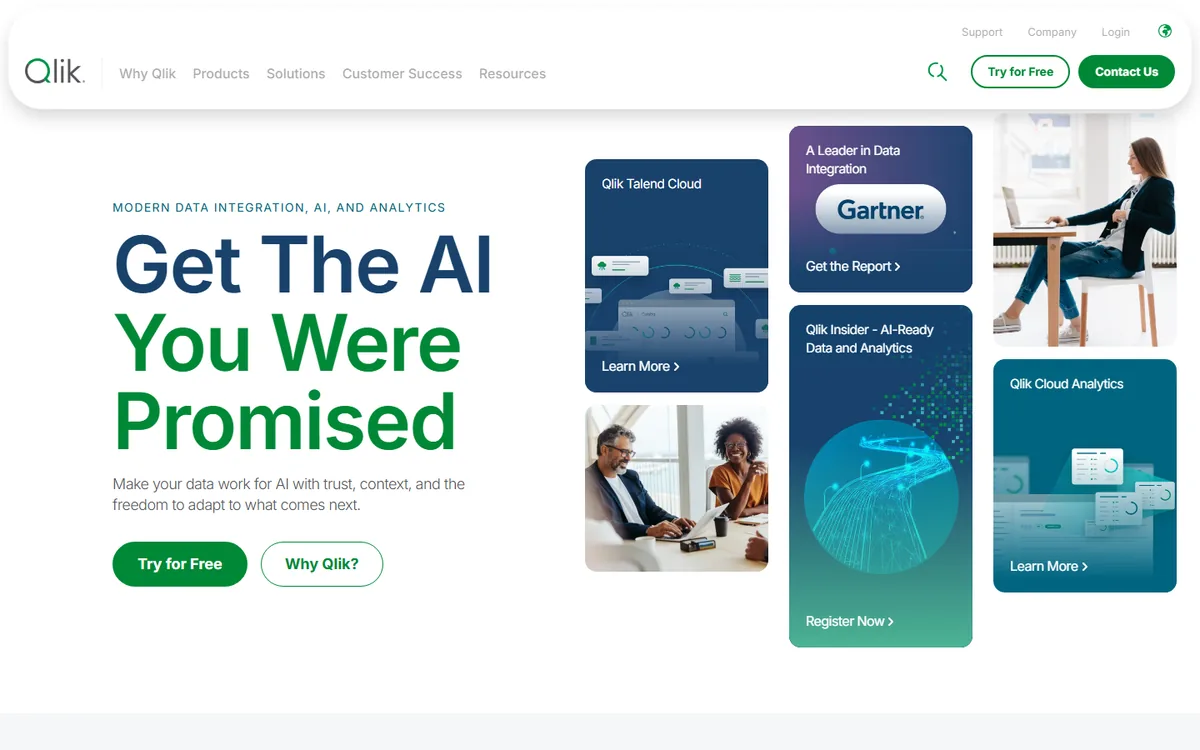
Best for Teams That Need to Explore Connections Across Many Data Sources
Qlik Sense is an analytics platform whose associative engine lets users click through related data without writing queries.
Qlik's associative engine shows what is related and what is excluded when you select a value. For healthcare, that helps when you move from a diagnosis group to related procedures, providers and payers without building each path in advance.
Qlik takes more setup than Power BI, and licensing is less straightforward to compare. I recommend it for larger organizations that already have data engineers and want strong self-service exploration. For a small team with a handful of dashboards, simpler tools usually get you there faster. For context on where tools fit in a wider program, see my healthcare analytics trends guide.
Where Qlik Sense Shines
- Associative exploration across linked data
- Strong data integration and governance features
- Works for embedded analytics
Where Qlik Sense Falls Short
- Steeper learning curve than Power BI
- Licensing takes effort to compare
Qlik Sense Pricing
Qlik publishes plan tiers but pricing changes often, so check Qlik's current pricing page or request a quote for your user count.
Qlik Sense Reviews
- G2: rated 4.4/5 (across 929 ratings)
InterSystems IRIS for Health
The Pick When Interoperability and Standards-Based Data Exchange Come First
InterSystems IRIS for Health is a data platform that supports healthcare data standards such as FHIR and brings records from many systems together.
IRIS for Health sits lower in the stack than the dashboard tools above. It helps you collect, normalize and serve data from many clinical systems through standards-based interfaces, and then feeds analytics on top.
In projects where the hard part is getting reliable data out of many systems, this layer matters more than the dashboard. It needs engineering skill, and business users will still need a BI tool in front of it. Treat it as infrastructure for your analytics, not as a replacement for Power BI or Tableau. For context on where tools fit in a wider program, see my healthcare analytics challenges guide.
Where InterSystems IRIS for Health Shines
- Strong healthcare interoperability and standards support
- Handles data from many clinical systems
- Good base for downstream analytics
Where InterSystems IRIS for Health Falls Short
- Engineering-heavy, not a business-user tool
- Needs a separate BI layer for dashboards
InterSystems IRIS for Health Pricing
InterSystems does not publish prices for IRIS for Health. Pricing is by quote and depends on deployment.
InterSystems IRIS for Health Reviews
- G2: rated 4.6/5 (across 29 ratings)
Oracle Enterprise Healthcare Analytics
A Natural Extension for Organizations Already Standardized on Oracle Health Systems
Oracle's healthcare analytics offering provides clinical and operational analytics aimed at large provider organizations.
If your clinical systems and finance run on Oracle products, Enterprise Healthcare Analytics shortens the path to a consistent set of measures, because the data models line up with systems you already operate.
The risk is lock-in and fit. If your environment mixes vendors, you spend effort on integration, and reviewers on G2 give it a mid-range 4.1. I would put it on a shortlist only after confirming how it handles non-Oracle sources, and after seeing a live demo with your own data.
Where Oracle Enterprise Healthcare Analytics Shines
- Aligned with Oracle clinical and finance systems
- Built for large provider organizations
- Supports enterprise governance needs
Where Oracle Enterprise Healthcare Analytics Falls Short
- Best value only inside the Oracle ecosystem
- Pricing is by quote and not public
Oracle Enterprise Healthcare Analytics Pricing
Oracle does not list pricing for this product on G2. Request a quote from Oracle based on your scope.
Oracle Enterprise Healthcare Analytics Reviews
- G2: rated 4.1/5 (across 27 ratings)
Arcadia
Worth a Look for Value-Based Care Reporting Across Providers and Payers
Arcadia is a healthcare data and analytics company serving provider and payer organizations, with a focus on aggregating data for value-based care.
Arcadia aggregates clinical and claims data and supports analytics for value-based care programs. It is relevant if you take on risk contracts and need a consistent view of cost and quality across practices.
Before you commit, ask how much of the data model you can inspect and change. I have seen teams struggle when a vendor's definitions did not match their contract measures, and fixing that later is expensive. Ask for a pilot that reproduces one contract report end to end from your own data. For context on where tools fit in a wider program, see my healthcare analytics framework guide.
Where Arcadia Shines
- Focus on value-based care and aggregated data
- Serves both provider and payer use cases
- Fits organizations taking on risk contracts
Where Arcadia Falls Short
- Narrower focus than a general BI tool
- No public pricing and review data is limited
Arcadia Pricing
Arcadia does not publish pricing. Quotes depend on your data sources and programs.
Arcadia Reviews
- G2: no rating shown on its G2 page when I checked
Definitive Healthcare
The Pick for Market and Provider Intelligence, Not Your Internal Operations Data
Definitive Healthcare is a database of healthcare providers, facilities and market activity used for sales, strategy and market analysis.
Definitive Healthcare works on the outside of your organization. It helps you size markets, find referral relationships and benchmark facilities, which complements internal analytics rather than replacing it.
It earns a place here because strategy and business development teams often need external data next to internal dashboards. The G2 rating is 3.9, and reviewers describe multi-year contracts, so read the terms and renewal clauses carefully. For internal clinical and financial reporting, choose one of the tools above instead.
Where Definitive Healthcare Shines
- Large database of providers and facilities for market analysis
- Useful for strategy and business development
- Complements internal reporting
Where Definitive Healthcare Falls Short
- Not a tool for your own internal data
- Reviewers mention multi-year contracts and renewal price increases
Definitive Healthcare Pricing
G2 shows no list price and describes cost as high. Reviewers mention multi-year terms. Ask for the full contract before you sign.
Definitive Healthcare Reviews
- G2: rated 3.9/5 (across 43 ratings)
Estimate the Return on a Healthcare Analytics Tool
Before you pick a plan, check whether the numbers work for you. Enter the manual reporting hours you want to remove and the monthly price of the tool you are considering, and you will see what it could return in a year.
Is the Software Worth the Cost?
Move the sliders to match the work you want the tool to cover and the plan you are considering.
How to Choose the Right Healthcare Analytics Software
In my experience, fit with your data and decisions matters more than any feature list. Before you compare vendors, answer four questions:
- Which decisions will the software support, and who makes them?
- Which systems hold the data, and how will it reach the tool?
- How sensitive is the data, and who must approve its use?
- Who will build and maintain the dashboards: analysts, IT or a partner?
If analysts will build the reports and you run on Microsoft, start with Power BI. If you have strong analysts who explore, look at Tableau or Qlik. If you want clinical content built in, look at Health Catalyst, and for population health, Innovaccer or Arcadia. If your hardest problem is getting data out of many systems, start with an interoperability layer such as IRIS for Health. If you want a second opinion on your shortlist, a short call usually settles it.
Questions About Choosing Healthcare Analytics Software
What Is the Best Healthcare Analytics Software?
It depends on the question. For dashboards on top of your own data, Power BI and Tableau are the most common choices. For built-in clinical content, look at Health Catalyst. For population health and care coordination, look at Innovaccer or Arcadia. Match the tool to the decision first.
How Much Does Healthcare Analytics Software Cost?
General BI tools publish per-user prices, such as Power BI Pro at $14.00 per user per month billed yearly. Healthcare-specific platforms such as Health Catalyst, Innovaccer and Arcadia use quotes based on scope. Always add the cost of data engineering and support, which is often larger than the license.
Do I Need Healthcare-Specific Software, or Is a BI Tool Enough?
A BI tool is enough for many operational and finance dashboards if you have a clean data model. Healthcare-specific platforms add value when you need clinical content, quality measures or population health workflows and do not want to build them yourself.
Can These Tools Work with My EHR?
Most connect to EHR data through extracts, databases or standard interfaces, but the effort differs. Platforms with healthcare data models and interoperability support reduce the work. Ask each vendor to demonstrate a connection to your EHR before you buy.
How Should I Handle Patient Privacy with Analytics Tools?
Limit access by role, use de-identified or limited datasets where the question allows and document data flows. Your privacy and compliance teams decide what is permitted, so involve them before you choose a vendor, and confirm the vendor's contractual terms.
How Long Does Implementation Take?
A first dashboard on a general BI tool can take weeks once the data is ready. Platform rollouts with healthcare data models take longer, because source systems and definitions need agreement first. Plan for data work, not just software setup.
Should I Hire a Consultant to Select and Set Up the Software?
An outside review helps most when you have several vendors, unclear data quality or past projects that stalled. A short selection exercise with a scored shortlist can save months of rework.
Disclaimer: Prices, plans and ratings change often. They were read from vendor and review sites when this article was last updated, so confirm them with each vendor before you buy. Nothing here is legal, compliance or financial advice.
Was this useful?
We appreciate the feedback.
Rosalind Tierney
Rosalind leads the Flume editorial team and works with our consultants to turn real client projects into practical guides on dashboards, tracking, experimentation and machine learning. Before joining Flume, she spent 11 years in analytics and business intelligence roles. She has since edited more than 300 articles on analytics practice and reviewed dashboards, tracking plans and analytics audits from over 100 client projects. She is based in Minneapolis, Minnesota.