In Short
- Standards-based data exchange lowers the cost of most analytics projects.
- Generative AI works best on administrative text first, with human review.
- Value-based contracts need one shared definition of cost and quality.
- Pick two trends that match your next 12 months, not all seven.
Every year brings a fresh list of healthcare analytics predictions, and most of them repeat last year's. I focus on shifts that change what you build or buy in the next planning cycle. If you are shaping a roadmap with healthcare analytics consulting, these are the seven I would put in front of your leadership team, along with what I would do about each.
I describe what has been decided or demonstrated, and I point to primary sources. Where regulation or policy is moving, check the current status yourself before you plan around it.
The Seven Shifts in One Table
| Trend | What is changing | What to do now |
|---|---|---|
| Standards-based data exchange | FHIR interfaces are becoming the default way to move data | Ask vendors for FHIR support and test it |
| Generative AI on clinical text | Language models summarize notes and answer questions on records | Pilot on low-risk, non-clinical text first |
| Lakehouse platforms | One cloud platform for clinical, claims and operational data | Consolidate pipelines before adding tools |
| Real-time operational analytics | Streaming data for capacity and alerts | Start with one live operations view |
| Value-based care reporting | Risk contracts need cost and quality in one view | Align measure definitions with contracts |
| Responsible AI governance | Model monitoring and documentation expectations rise | Create a model register and review routine |
| Patient-generated and social data | Wearables, surveys and community data join the record | Define consent and use cases before collecting |
1. Standards-Based Data Exchange Becomes the Default
For years, getting data out of a clinical system meant a custom extract. The industry has been moving toward common interfaces, and HL7 FHIR is the standard most vendors now name when they describe application programming interfaces. In the Trusted Exchange Framework and Common Agreement, the federal health IT office describes a nationwide approach to exchange between networks.
For your analytics team, the practical effect is that integration gets cheaper where vendors have done the work and stays hard where they have not. Test it: ask a vendor to show a FHIR connection returning your own data, not a demo set. I treat FHIR support as a selection criterion in the healthcare analytics software comparisons I run.
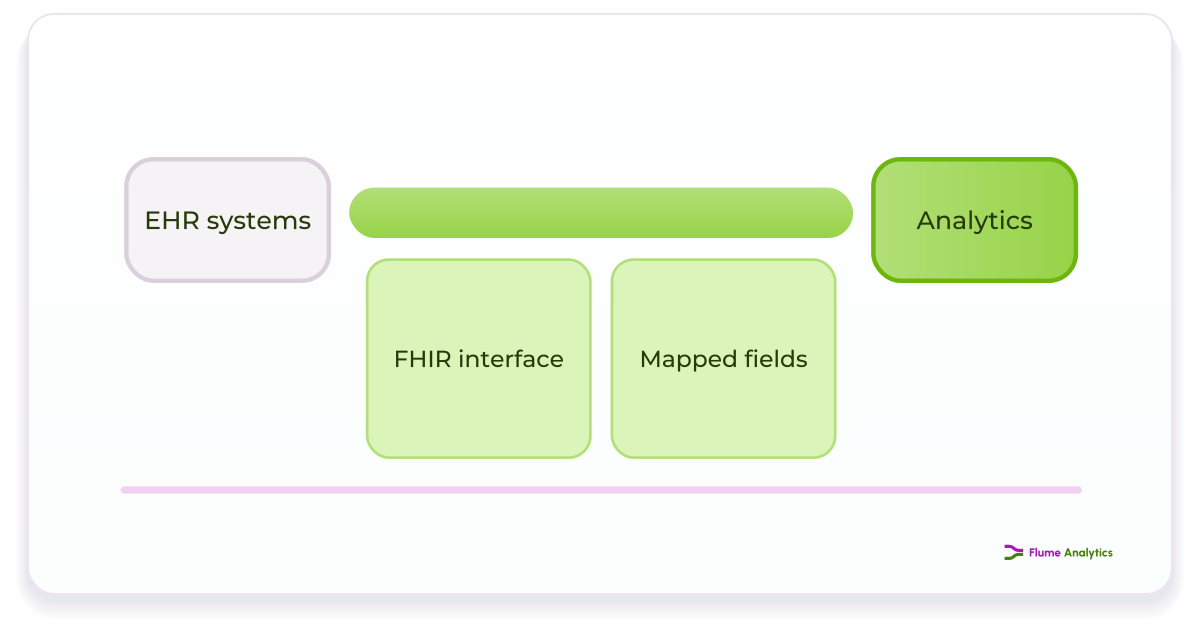
One edge case worth knowing: a FHIR interface exposes what the vendor chose to expose. Fields you need for analytics, such as timestamps for each stage of a visit, are sometimes missing or stored differently. Run a field-by-field check against your top five reports before you assume the interface replaces your current extract.
2. Generative AI Moves Into Clinical and Administrative Text
Notes, referral letters and call transcripts hold information that structured fields miss. Language models can summarize them, group them by topic and help staff find answers in long records. Administrative text such as call logs, survey comments and prior authorization letters is the lower-risk place to begin.
Treat clinical use differently. Outputs can be wrong in fluent language, so you need human review, logging and a clear boundary on what the tool may do. The NIST AI Risk Management Framework offers a vocabulary for mapping and managing these risks, and the U.S. Food and Drug Administration keeps a public list of AI-enabled medical devices that shows how regulated uses are tracked.
3. Lakehouse and Cloud Platforms Replace Separate Stores
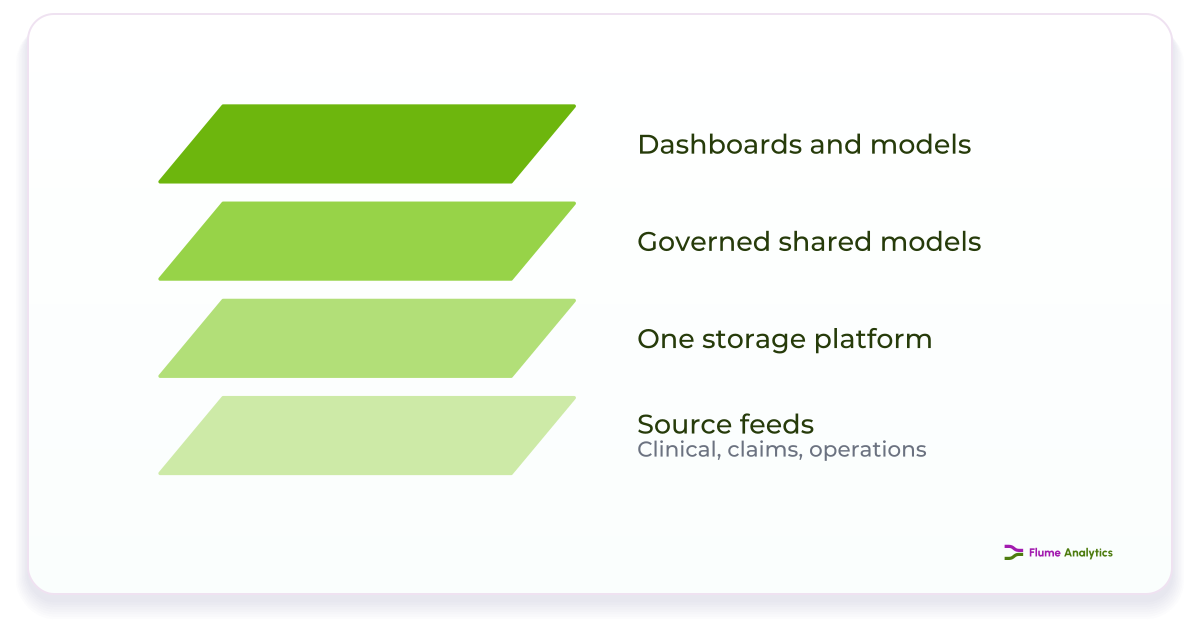
Organizations that kept clinical data in one warehouse, claims in another and operational data in spreadsheets are consolidating. Cloud platforms that combine lake storage with warehouse-style querying let teams hold structured tables and raw files together.
The benefit is fewer copies and one place for governance. The risk is a migration that takes longer than planned. I tell clients to move one domain end to end, such as scheduling or revenue cycle, and measure query time and report accuracy before moving the next. Common data models such as the OHDSI OMOP model help when you need research-ready structure.
A practical test for any language model pilot: measure time saved per task and the error rate after review, against the manual process. If reviewers spend as long correcting output as they would have spent writing it, the pilot is not ready, however good the demo looked. Keep the pilot narrow and the review step mandatory until the numbers hold.
4. Real-Time Operations Views Spread Beyond the Emergency Department
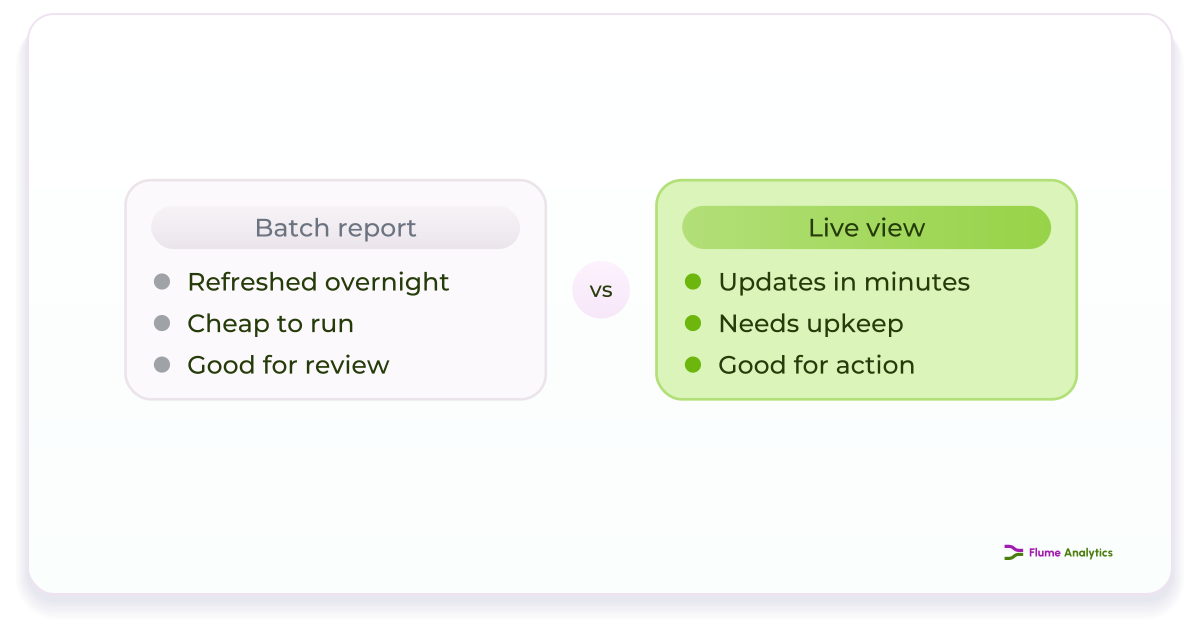
Capacity and flow decisions benefit from fresher data than yesterday's report. Streaming from admissions, discharge and transfer messages feeds live views of bed status, expected discharges and wait times. Command-center style rooms are the visible form, but a single screen in a morning huddle can deliver much of the value.
Start with one decision, such as which units will be full by afternoon, and prove it changes behavior. Live data brings costs for maintenance and alert fatigue, so limit alerts to the cases someone will act on. My notes on healthcare analytics use cases show which operational plays tend to repay a live feed.
Latency also has a hidden cost: someone has to maintain the stream. When an upstream system changes a message format, a live view breaks silently. Build a simple freshness indicator on every live screen, so users see when data is stale instead of trusting an old number.
5. Value-Based Care Pushes Cost and Quality Into One View
As more contracts carry financial risk, finance and clinical leaders need the same report. That means attributing patients to providers, calculating cost per member and tracking quality measures from a shared definition. Mismatched definitions between your analytics and your contract language cause disputes later.
Write down each contract measure and how it is calculated, and build from that text. The healthcare analytics framework article places this step early, because rework here costs the most. healthcare analytics examples shows how one health plan matched outreach to risk.
Plan for the human side. Contracts often name specific measures, and the people who negotiated them rarely talk to the analysts who build the reports. Put both in one room for a day, and you remove months of later argument. I have watched a single misread attribution rule move a quality score enough to change a bonus calculation.
6. Governance for Models Gets Formal
As more models touch decisions, organizations are adding registers of what is deployed, who owns it, how it was validated and how it is monitored. Reviews check performance across patient groups, not just overall accuracy, and document the intended use.
A short model register is a good start: name, owner, purpose, data used, last validation date and monitoring result. Add a review before any model enters a clinical workflow. These routines are cheap compared with the cost of an unmonitored model that drifts quietly.
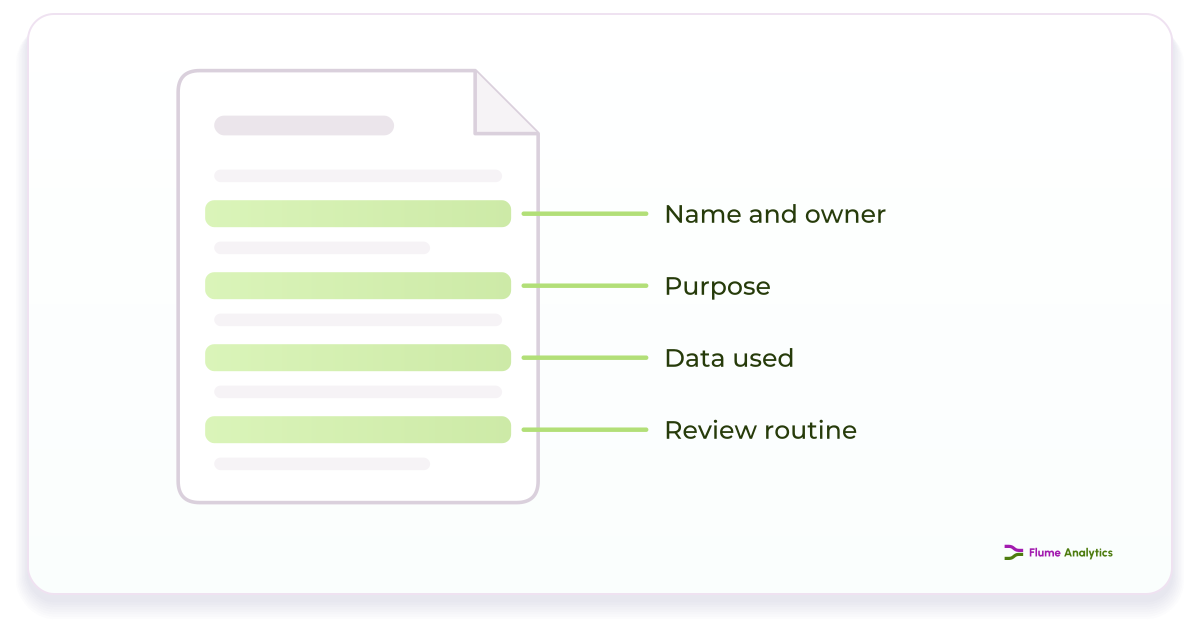
Ownership matters as much as the register. Each model needs one named person who answers when its numbers look odd, and a rule for what happens when monitoring shows decay: retrain, restrict or retire. Without that rule, a drifting model stays in use because nobody has the authority to switch it off.
7. Patient-Generated and Social Data Enter the Picture
Wearable readings, home monitoring, surveys and social needs screening add context that visits miss. Linking them to clinical records can sharpen risk models and outreach, but only with clear consent and a defined purpose.
My advice is to decide the question first. Collect social needs data if you can act on it, for example through referral programs. Rules on privacy and de-identification matter here, and the HHS guidance on de-identification is the place to start reading, with your own compliance team as the authority on what applies to you.
Where the Hype Runs Ahead of Practice
Three claims I treat with caution. First, that a single platform will solve data quality. Platforms move data and do not decide what a visit or a readmission means, so definitions still need people. Second, that an assistant can answer any question about your data. It can answer questions the data model supports, and a messy model produces confident wrong answers. Third, that real-time is always better. Many decisions are made weekly, and a nightly refresh costs far less.
In my client work, the teams that get value from new technology had already done the dull work: agreed definitions, clean identifiers and a named owner for each measure. The trends above speed up teams with that base and expose teams without it. If you are unsure which group you are in, a short audit of your top ten reports answers the question quickly.
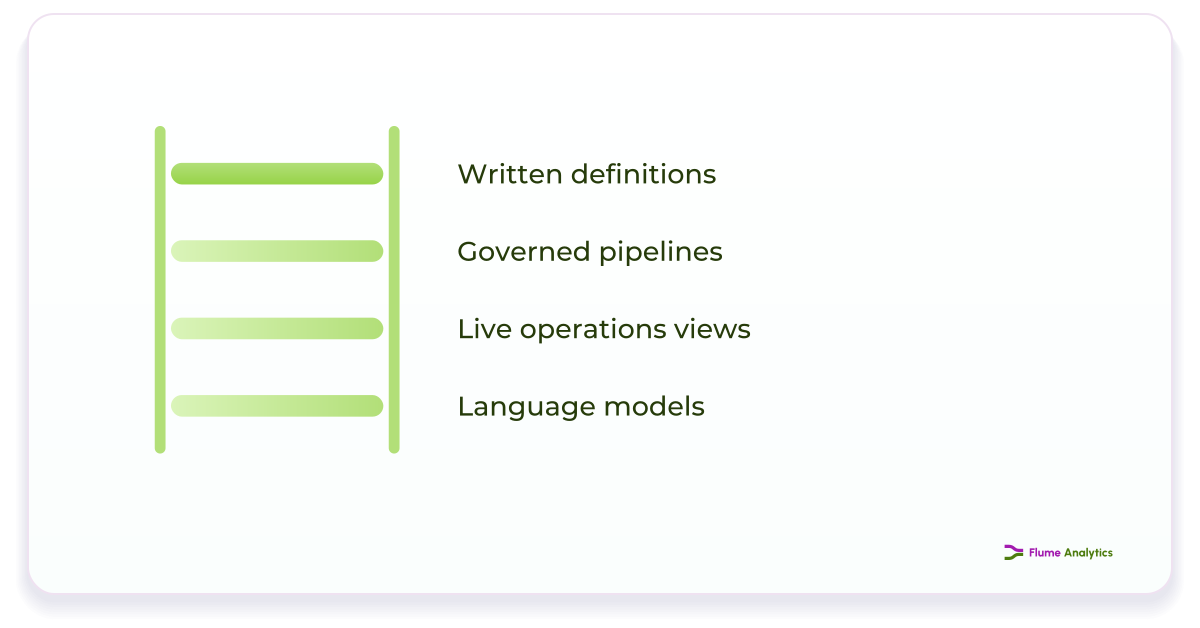
A Sensible 12-Month Sequence
Sequence the work so each step makes the next cheaper. The table shows the order I suggest for an organization starting from scattered data.
| Quarter | Focus | Output |
|---|---|---|
| Months 1 to 3 | Definitions and data audit | Written measures, owners and a list of broken pipelines |
| Months 4 to 6 | Consolidate one domain | One governed model for scheduling or revenue cycle |
| Months 7 to 9 | First operational view and pilot model | A live view or a scored list with a baseline test |
| Months 10 to 12 | Governance and review | Model register, monitoring and a roadmap update |
Notice that the new technology shows up in the second half. That order is deliberate: pilots on a clean base give you results you can trust, and you can judge a vendor's claims against your own data instead of a demo.
How to Plan Around These Trends
You do not need all seven. Choose the two that match your next 12 months. A health system consolidating platforms should prioritize data exchange and the lakehouse. A group taking on risk contracts should focus on value-based reporting and governance. Everyone should check how today's vendors handle standards.
- Pick two trends that match contracts or projects already planned.
- Name an owner and a measurable first step for each.
- Review the list twice a year, since the field moves fast.
- Do not buy a tool for a trend before you have a use case.
Trends also interact with the obstacles teams meet in practice, which I cover in healthcare analytics challenges. Reading both together gives you a realistic plan.
Questions About Healthcare Analytics Trends
What Is the Biggest Healthcare Analytics Trend Right Now?
Generative AI gets the most attention, but standards-based data exchange affects more projects. Cheaper, more reliable data access lowers the cost of every analytics use case.
Is Generative AI Safe to Use on Clinical Data?
It can be used with care. Start with administrative text, keep humans in the loop, log outputs and test on a labelled sample. Your compliance and clinical leaders decide what is acceptable for clinical use.
What Is FHIR and Why Does It Matter to Analytics Teams?
FHIR is a standard from HL7 for exchanging healthcare data through application programming interfaces. It matters because it can make data access from clinical systems more consistent and less dependent on custom extracts.
Should I Move My Data to a Lakehouse?
If you maintain several separate stores and spend a lot of time copying data, consolidation can help. Move one domain first, measure results and expand.
How Do I Prepare for Value-Based Care Reporting?
Write each contract measure and its calculation in plain language, map the data sources, and build one definition that finance and clinical teams both use.
What Does Responsible AI Governance Involve?
A register of deployed models, named owners, documented intended use, validation across patient groups and regular monitoring. Start with a short register and a review step before deployment.
How Often Should I Revisit My Analytics Roadmap?
Twice a year is a good rhythm. Review which trends affect your contracts, vendors and data, and update owners and first steps.
Important: nothing in this article is legal, financial or tax advice. All figures are estimates from typical projects, so verify them with your own providers and advisers.
Was this useful?
We appreciate the feedback.
Rosalind Tierney
Rosalind leads the Flume editorial team and works with our consultants to turn real client projects into practical guides on dashboards, tracking, experimentation and machine learning. Before joining Flume, she spent 11 years in analytics and business intelligence roles. She has since edited more than 300 articles on analytics practice and reviewed dashboards, tracking plans and analytics audits from over 100 client projects. She is based in Minneapolis, Minnesota.