In Short
- Six phases take you from a business question to an action that someone follows up.
- Phases one to three need no new software, only decisions and clean data.
- Each phase has an exit check, so you know when to move on.
- Privacy and governance run through every phase and cannot wait until the end.
Most HR analytics efforts stall for the same reason: they begin with a tool and end with a dashboard nobody opens. The model below, which I use in HR analytics consulting projects, begins with the decision and ends with a follow-up, and it fits in six phases.
The phases are sequential, but they overlap in practice. You will return to definitions while you build the data model, and that is fine. Use the table to see the whole path first, then read the phase you are in.
Overview of the Six Phases
| Phase | What you do | Output | Typical time | Exit check |
|---|---|---|---|---|
| 1. Frame the questions | Collect and rank the people questions leaders ask | A ranked list of three to five questions | 1 week | Each question has an owner and a decision |
| 2. Define the metrics | Write one definition for each number | A definitions page | 1 to 2 weeks | HR and finance agree on the formulas |
| 3. Map and clean the data | Find sources, fix identifiers, check quality | A data inventory and a clean extract | 2 to 4 weeks | A headcount reconciles with payroll |
| 4. Build the model | Create one governed people data table | A tested model and first reports | 2 to 3 weeks | Numbers match the definitions page |
| 5. Analyze and share | Answer the questions and brief managers | Findings with a suggested action each | 2 weeks | A manager has read and acted on one finding |
| 6. Review and extend | Check what changed and choose the next question | A quarterly review and a backlog | Ongoing | One decision changed because of the data |
Phase 1: Frame the Questions
Interview five to eight leaders and ask what they would do differently if they had better people data. Write down the questions in their own words, such as why one region loses sales staff faster, or where hiring stalls. Rank them by value and by how likely the data is to exist.
Three to five questions is enough. A list of twenty means nothing gets finished. Examples of how other teams frame theirs are in my collection of HR analytics examples.
Phase 2: Define the Metrics
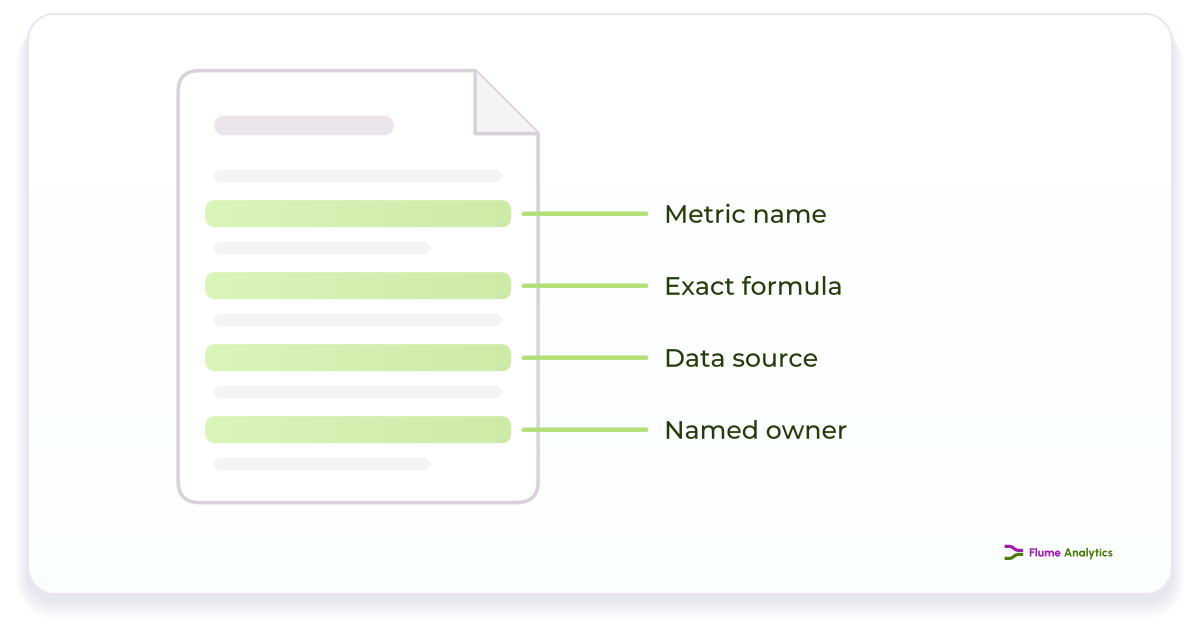
For each question, name the metrics it needs and write the formula in one sentence. Settle the usual traps now: does headcount include contractors, and when does a hire start counting?
Finance should sign off on anything that touches headcount or cost, because finance reports the same figures to the board. The nine metrics I recommend first are laid out in HR analytics metrics, with the formula for each.
Phase 3: Map and Clean the Data
List every system that holds people data: the HR system, applicant tracking, payroll, performance, survey and learning tools. For each, note what it contains, who owns it and how you can export it. Then test the basics. Does every employee have one stable ID? Is every manager link present? Do headcounts agree with payroll?
Expect this phase to run long. In my experience, about half the effort of an HR analytics project goes into reconciling identifiers and job titles. The payoff is that every later analysis becomes faster.
Phase 4: Build the Model
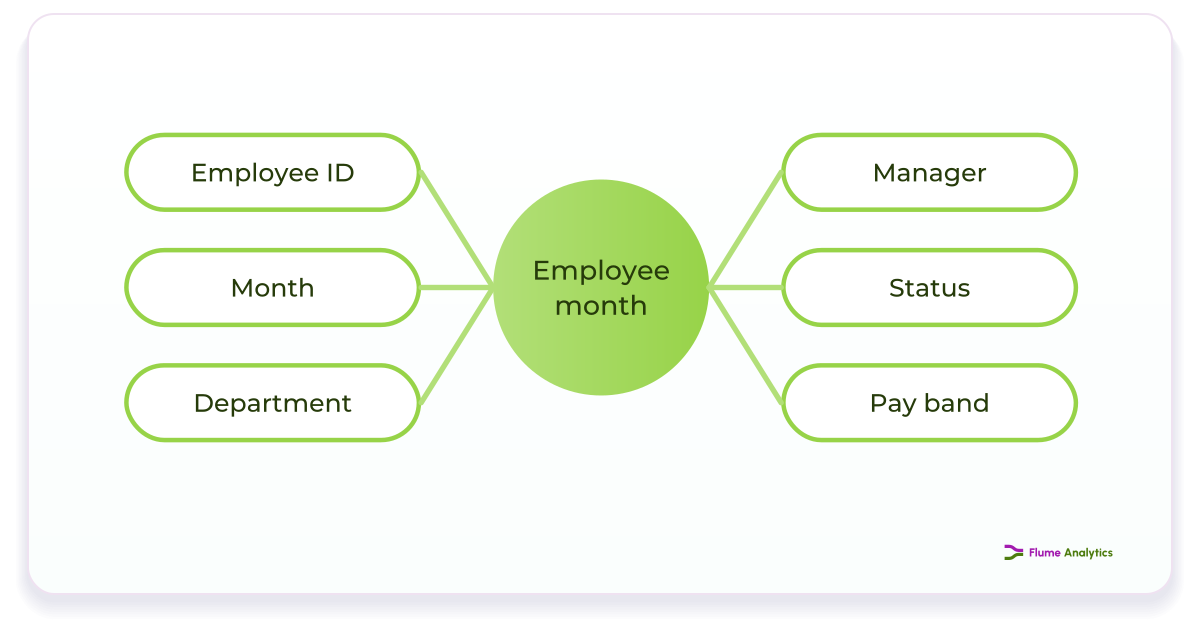
Create one table per employee per month, with the attributes you need: team, manager, location, level, tenure and status. Every report reads from it, which is why the definitions on your page and the numbers on the dashboard agree.
This is the point to choose tools, if you have not already. A spreadsheet and a BI tool carry most teams a long way, and a dedicated platform helps when you have several data sources and many self-service users. My ranking of HR analytics software compares the leading options.
Phase 5: Analyze and Share
Answer the ranked questions, then write each finding in three lines: what you saw, why it matters, what you suggest. Brief managers on their own teams only. A short monthly summary does more than a dashboard link.
Test one finding with a manager before you publish. Ask what they would do with it. If the answer is nothing, the finding needs a clearer action or a different question.
Phase 6: Review and Extend
Every quarter, ask which decisions changed because of the data, which reports nobody opened, and what the next question is. Retire what is unused. Add one new question, never five.
This phase is where outside change matters most, such as new rules on hiring algorithms and the growth of AI tools in HR. I follow them in HR analytics trends, and the numbers worth showing to executives sit in the guide to HR analytics KPIs.
Where Each Phase Usually Goes Wrong
After a number of these projects, the failures repeat. The table lists the most common ones, how you notice them early and what I do about each.
| Phase | Typical failure | Early sign | Fix |
|---|---|---|---|
| 1. Frame the questions | A long wish list with no owner | Every question is called a priority | Cut to three and name a decision for each |
| 2. Define the metrics | HR and finance keep separate definitions | Two headcount figures in one meeting | Hold one session with both and write the formula down |
| 3. Map and clean the data | Employee IDs differ across systems | Joins drop 10 percent of records | Create a mapping table and fix the source where you can |
| 4. Build the model | Reports each read their own extract | A dashboard disagrees with the definitions page | Point every report at the one governed table |
| 5. Analyze and share | Findings stop at a dashboard link | Views but no actions | Send short summaries with one suggested action |
| 6. Review and extend | New reports pile up, old ones never retire | Nobody can say which are used | Retire what has not been opened in a quarter |
The pattern in the table is that early phases fail through disagreement and later phases fail through inattention. Early on you need a meeting and a decision. Later you need a routine, such as a calendar entry for the quarterly review that someone owns.
A Realistic Timeline for the First Release
For a company of around a thousand people with three or four HR systems, the first release usually takes eight to twelve weeks. Phases one and two take the first three weeks, mostly in meetings. Phase three takes the longest, and delays here are normal: an access approval that takes two weeks is a common culprit.
I plan for one slip of about two weeks in every project and say so at the start. Teams that expect it stay calm, and teams that do not tend to cut corners in phase two to make up time. That is the corner you least want to cut, since every number afterwards depends on it.
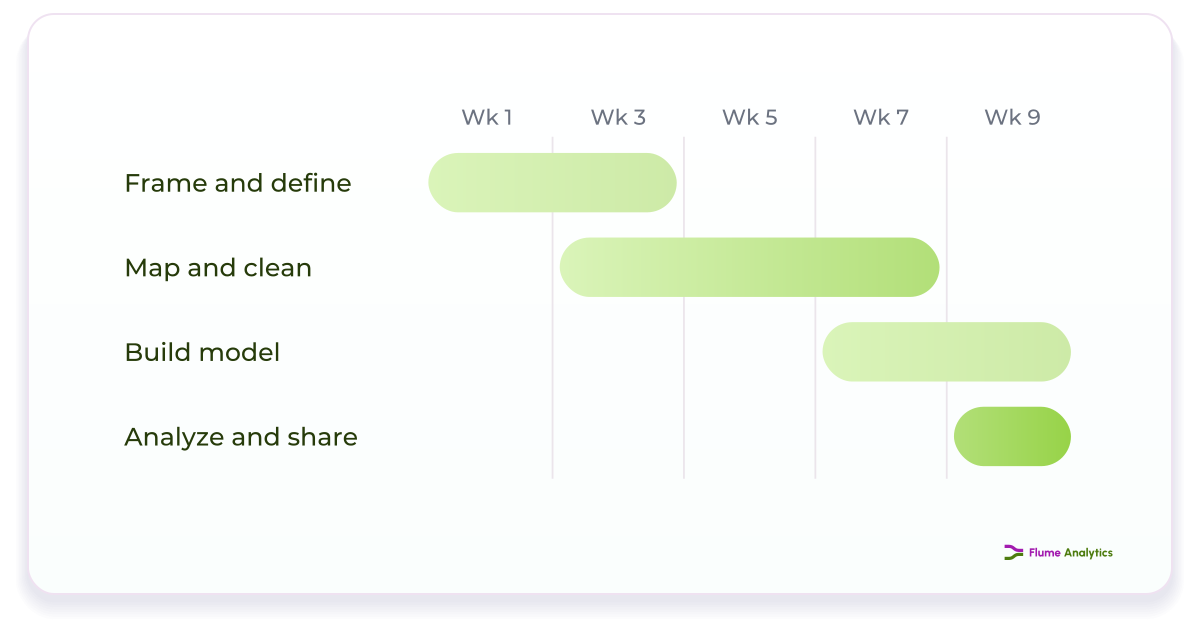
After the first release, the rhythm changes. You add one question per quarter, which takes two to four weeks when the model is sound. Many teams find they can run four or five questions a year with a part-time analyst, which is enough to change how managers talk about people decisions.
Governance That Runs Through All Six Phases
Privacy and access rules are not a seventh phase. They belong in every one of them, and they are far cheaper to set early.
- Write down what you analyze and at what level, and share it with employees.
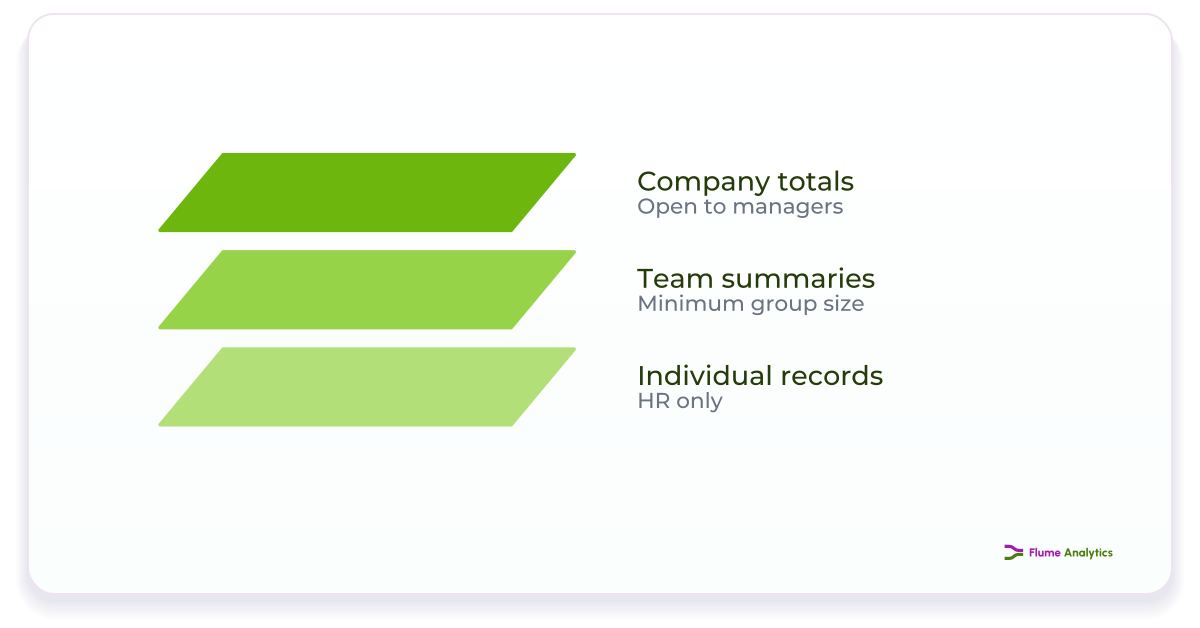
- Report groups under five people only at a higher level.
- Give access by role, and log who opens sensitive data.
- Keep a person in charge of every decision that affects an individual.
- Check the current rules in each country where you employ people.
One last point on pace. A framework is not a promise to complete all six phases in one go. Many teams stop after phase four for a quarter while the model settles, and that is healthy as long as someone owns the next step and the date is on the calendar.
Who Does What in the Model
A framework fails quietly when roles are vague. Four roles are enough for most companies, and in a small team one person can hold two of them.
The sponsor is a leader, often the head of HR or the CFO, who asks for the results and removes blockers such as data access. The owner sits in HR, answers for the definitions and decides what counts as headcount. The analyst builds and tests the model and the reports. The reviewers are one person from finance and one from legal or privacy, who check definitions and rules before anything reaches managers.
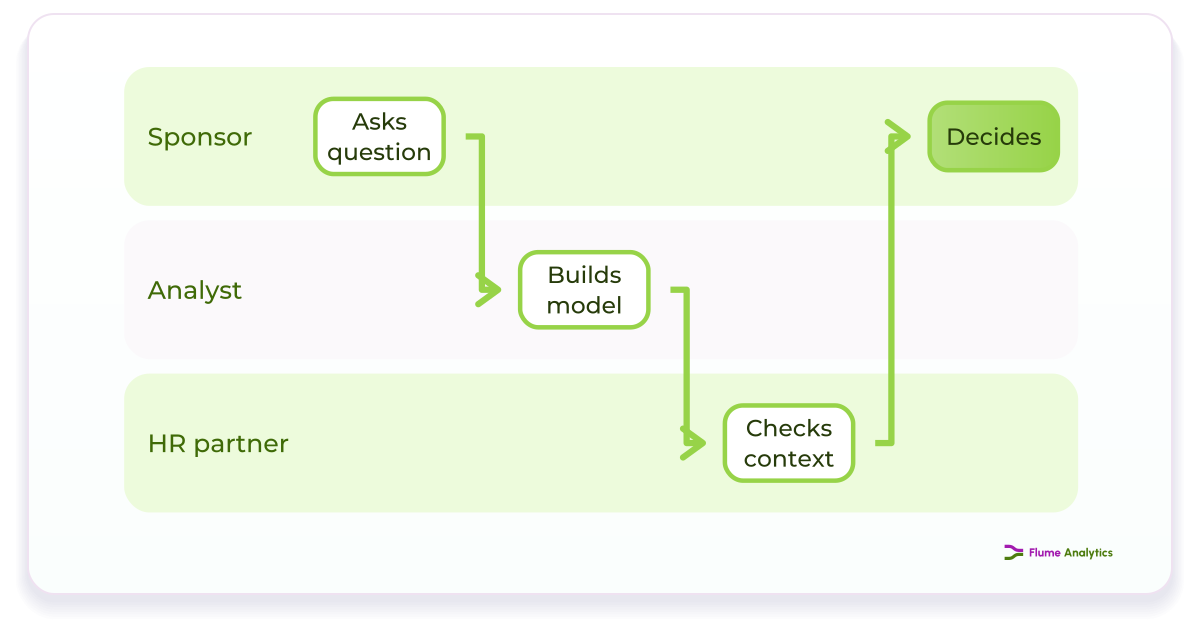
Write the four names on the first page of your plan. When a number is questioned in a meeting, you then know whom to ask, and the answer does not depend on who happens to be in the room. Teams that skip this step spend their phase-five meetings discussing who is allowed to change a formula.
Where Should You Begin? in the Framework
If you already have dashboards but nobody trusts them, start at phase two and rebuild the definitions. If you have no data model, start at phase three. If everything exists but nothing changes, start at phase five and work on how findings reach managers.
- One sponsor in leadership who asks for the results.
- One owner in HR who answers for the definitions.
- One analyst, in-house or external, who builds the model.
Questions About the HR Analytics Framework
What Is an HR Analytics Framework?
It is the sequence of decisions and work that turns people data into actions: choosing questions, defining metrics, building a data model, analyzing, sharing results and following up. Without one, teams build dashboards that nobody uses.
How Long Does It Take to Put an HR Analytics Framework in Place?
A first working version, covering one question, usually takes six to ten weeks. A full operating model with several data sources and regular reviews takes longer, and grows in steps.
Who Should Own HR Analytics?
A named person in HR, with a data analyst partner and a sponsor in the leadership team. IT supports access and security. If ownership is shared by everyone, nobody answers for the numbers.
Do I Need an HR Analytics Platform Before I Begin?
No. Phases one to three need clear questions, definitions and a clean data extract, none of which depends on software. Choose a tool once you know which questions it must answer.
How Do I Get Managers to Use the Results?
Put the insight where they already work, such as a short monthly team summary, and attach one suggested action. Show them only their own teams, and keep the language free of jargon.
How Do I Deal with Privacy and Works Councils?
Document what you analyze, at what level and who can see it, and share that with employee representatives early. Involve legal counsel and check the rules in each country where you operate.
How Do I Know the Framework Works?
Look for actions taken as a result of an analysis: a process changed, a budget moved, a team supported. If dashboards get views but nothing changes, the framework stops at phase four.
Important: nothing in this article is legal, financial or tax advice. All figures are estimates from typical projects, so verify them with your own providers and advisers.
Was this useful?
We appreciate the feedback.
Rosalind Tierney
Rosalind leads the Flume editorial team and works with our consultants to turn real client projects into practical guides on dashboards, tracking, experimentation and machine learning. Before joining Flume, she spent 11 years in analytics and business intelligence roles. She has since edited more than 300 articles on analytics practice and reviewed dashboards, tracking plans and analytics audits from over 100 client projects. She is based in Minneapolis, Minnesota.